Evaluating Research:
Table of Contents/Headings
When glancing down the table of contents in a book or the headings in an article, you should ask yourself the following questions:
- What topics are covered?
- What topics are missing?
- What is the tone of the chapter or heading titles?
Your better quality publications will tend to have clear, straightforward titles and headers that make it easy for you to locate information in the publication.
Discussion
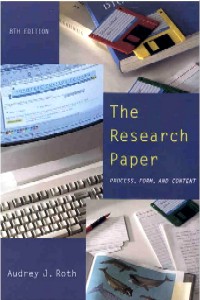
When I was hired to teach my first class at Schoolcraft College, Audrey J. Roth's The Research Paper: Process, Form, and Content had already been chosen for me. It only took me about two minutes glancing at the "Table of Contents" to conclude that it would likely be a credible source because Roth covers the important concepts of the research and writing process. Use of the word "likely" in the previous sentence is not meant to imply that there is something wrong with Roth's text or that further examination will uncover a serious flaw. Instead, "likely" is used because a quick glance in not sufficient to make a firm conclusion. During the semester I used the book, I discovered that my initial impression was correct.
Special Note on Dates
Date of publication is very important. Since Roth published her book, both the Modern Language Association and the American Psychological Association have changed their citation guidelines. Although the general research strategies presented in her "Table of Contents" continue to appear credible, much of the information she provides is no longer current.
 Search the Table of Contents at Amazon.com
One of the wonderful features of Amazon.com is that you can often browse a book's table of contents before you buy it.
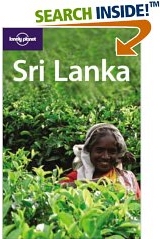
This feature can also be an effective research strategy because, by scanning a book's contents, you get an idea about a book's quality before you track down a copy of it. Or, by scanning the book at Amazon.com, you can get ideas for your research. If you have not used this feature before, you might want to scan Joe Cummings' Sri Lanka.